
Weekly Market Review, W/C 31st August 2026: Warsh Jackson Hole Speech Dominates
Updated: Sep 1
Rating: Quiet Week, Dominated by One Catalyst | Bias: Technical Led, Fundamental Conflicts Flagged, Watchlist Heavy
The Big Picture
Not much fresh news to work with this week, so the entire macro picture is being shaped by one event: Kevin Warsh's Jackson Hole speech. His tone was unexpectedly hawkish, a clear reaffirmation of the 2% inflation target with a strong suggestion that rates may need to rise further. The market reaction was immediate and telling. Fed rate hike probability for September jumped, gold fell, and the dollar firmed. The speech displaced the $40 trillion US debt narrative as the dominant catalyst for the week. Debt debasement had been driving dollar weakness and pushing gold sharply higher a fortnight ago. Now a hawkish Fed chair has stepped in and reversed both moves in the opposite direction.
The technical setups this week are being led by price, not narrative. Where the chart and the fundamental picture disagree, that conflict is called out explicitly below and the trade is treated as a watchlist item rather than a live position until an actual entry trigger presents itself.
A Genuinely Mixed Macro Picture
Beneath the Warsh headline, the broader macro backdrop is sending conflicting signals that are worth reviewing and acknowledging.
Credit conditions are tightening even as carry trades continue to be put on. That is not a comfortable combination. Carry trades thrive on stable, low volatility conditions, and tightening credit is usually an early sign that stability is starting to fray. Liquidity is gradually declining too, which removes some of the fuel that has been supporting asset prices through the year.
The US economy itself is looking lukewarm. Consumer spending is slowing, and that theme has now been building for several weeks running. None of this is a collapse. It is a steady drift in a less supportive direction.
What stands out most is the positioning. Asset managers remain heavily bullish on the S&P 500 and Nasdaq despite this softer backdrop. Tightening credit, declining liquidity, a lukewarm economy and slowing consumer spending are not usually the ingredients for aggressive bullish positioning. The combination feels complacent. It does not mean a reversal is imminent, but it is a genuine reason to be cautious rather than to chase strength in either index at current levels.
The Fed. Warsh Turns Hawkish
Fed funds futures repriced meaningfully. The probability of a September hike moved from the mid-50s into the high-50s to 60% range. Gold sold off and the dollar strengthened in direct response, reversing part of the debasement trade that had driven gold's strongest monthly gain in August.
The fundamental read from this is straightforward. A more hawkish Fed supports the dollar and pressures gold through higher real yields. That is the read stated plainly here so the trade section below can be judged against it.
DXY. Technical Sell Bias, Conflicts With Fundamentals
The chart is showing a daily sell bias on DXY. This directly conflicts with the Warsh driven fundamental case, which argues for dollar strength as hike probability rises. Rather than force a trade that fights the macro narrative, this is being flagged as a conflict and placed on the watchlist. No entry until price confirms a clean setup that either resolves in line with the fundamental case or demonstrates the technical picture is genuinely leading price against it. Reassess once a trigger presents itself. A close above 101.50 presents a valid bullish case.

Gold. Technical Buy Bias, Conflicts With Fundamentals
The chart shows a weekly and daily buy bias on gold. This is the direct opposite of what the Warsh news would suggest. Higher real yields and a firmer dollar are typically a headwind for gold, and the immediate price reaction to the speech confirmed exactly that with gold selling off. This is another flagged conflict. If the technical buy setup develops into a genuine confirmed entry trigger despite the fundamental headwind, it will be reassessed at that point, but it is not being treated as a live trade this week.

USDJPY. Technical Sell Bias, Conflicts With Fundamentals
Same story. A weekly and daily sell bias on USDJPY implies dollar weakness against the yen, which does not sit comfortably alongside a Fed turning more hawkish. Watchlist only, pending a genuine entry trigger and reassessment of whether this is a case of the chart leading or lagging the news.

A Longer Term Theme Worth Watching. Bonds
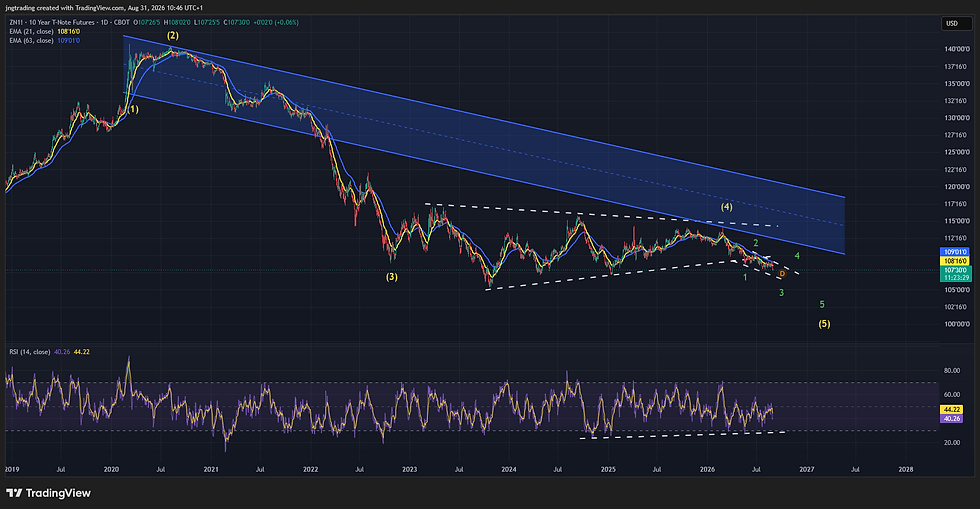
Bonds across the US, EU, UK and Japan have been in a downtrend for several years. There is a developing question worth sitting with. Are we approaching a divergence stage where selling pressure is not matching previous swing lows, potentially signalling an early change in direction?
If bond yields are peaking and beginning to roll over, that would typically coincide with a genuine risk off shift rather than the current constructive with caveats backdrop. USDJPY could be one of the cleanest expressions of that theme if it develops, since yen strength tends to accelerate in genuine risk off conditions. This is an early, developing observation rather than a call being made this week. Flagging it as a theme to monitor over coming weeks rather than a trade.
What to Watch
Asset manager positioning on S&P 500 and Nasdaq. Heavily bullish positioning against a softening backdrop is the complacency signal to track. Any unwind here could move quickly
Credit tightening alongside active carry trades. An unusual combination worth monitoring for signs one side gives way to the other
DXY, Gold, USDJPY conflicts. All three watchlist items pending a genuine technical entry trigger. Reassess weekly as price develops
September Fed meeting. The next major catalyst. Confirmation of a hike would validate the fundamental case that currently conflicts with three of this week's technical reads
Bond yield divergence. An early stage theme. Watching for confirmation that swing lows are becoming shallower across US, EU, UK and JP yields
These are my views based on my own analysis at the time of writing. Nothing here is financial advice. Always do your own research and manage your risk.


Comments